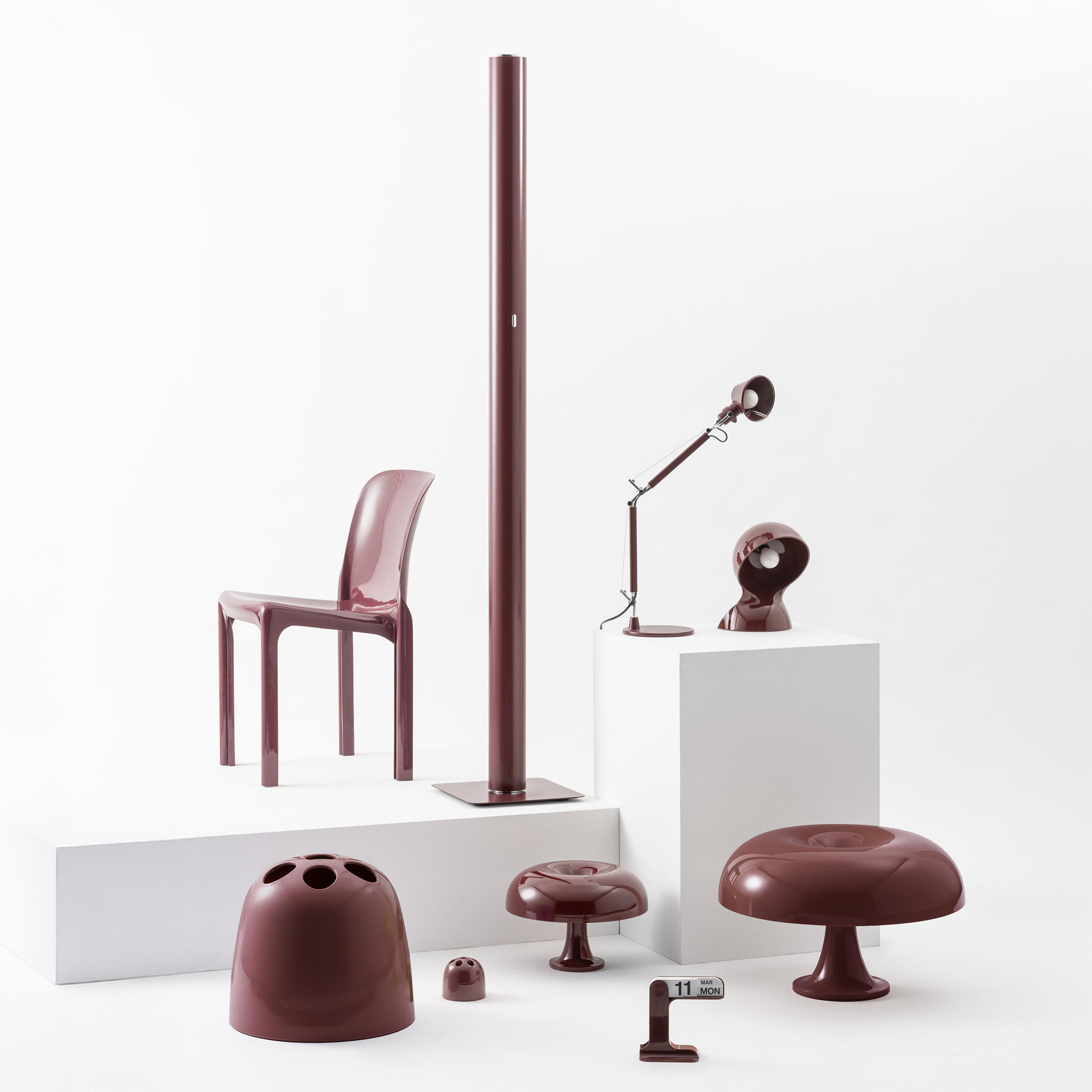
Ruby Red Collection by Artemide and Danese Milano
Artemide and Danese Milano reinterpret some of their most recognisable icons in a limited edition defined by a bold, contemporary character. The deep red hue revitalises timeless forms, enhancing their identity and offering a fresh perspective
4 May 2026
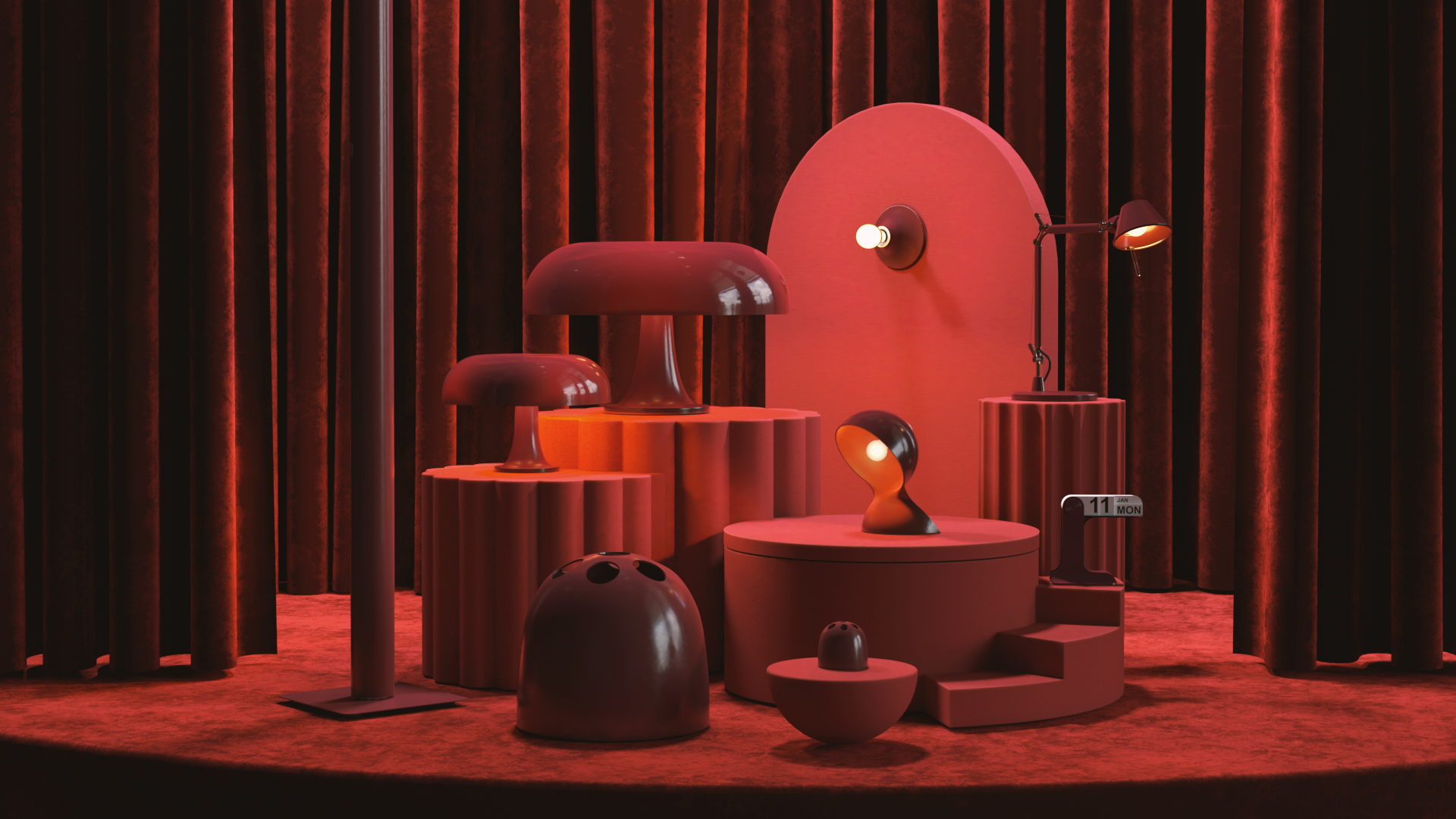
A dialogue emerges between light and design, in which colour plays a central role in redefining interior spaces
The Ruby Red Collection represents an act of reinterpretation: colour becomes a design tool, capable of reshaping the perception of objects, revealing new qualities and intensifying their relationship with space. The glossy, saturated red lends each piece a more vivid and expressive presence.
Within the collection, several Artemide icons are transformed through this intervention. The technical geometries of Tolomeo Micro are brought into sharper focus, making its mechanical balance more legible; the verticality of Ilio is reinforced, becoming an architectural element that structures space; the sculptural forms of Dalù, Nesso and Nessino acquire new depth in Ruby Red, where reflected and diffused light enhance the material perception of each object.


Even the most essential solutions, such as Teti, take on renewed presence: their simplicity gains a visual strength that places them at the centre of the domestic environment. In each case, colour acts as a unifying element between function and perception, technology and form.
Alongside this dialogue, a selection of iconic objects by Danese Milano extends the narrative beyond light. The Timor calendar introduces a dynamic dimension of time, while Dedalo and Dedalino explore the relationship between everyday use and the shaping of space.
Selene, designed by Vico Magistretti, also becomes part of this context, now reissued by Danese Milano after many years out of production. Originally developed within Artemide’s broader design journey, when the company was also exploring the world of furniture, Selene returns as part of a vision that reconnects with and celebrates that history, while preserving its original radical character.
The Ruby Red Collection thus forms a cohesive whole, in which objects of differing functions and origins enter into dialogue through a shared identity, defined by colour and by their capacity to animate space.